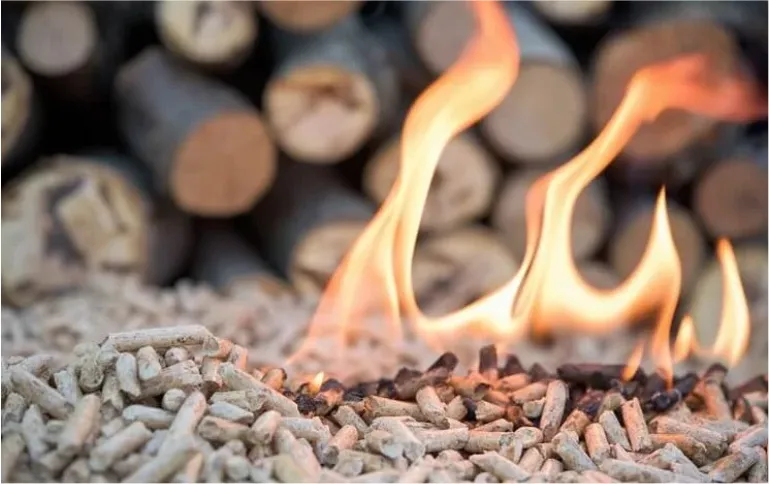
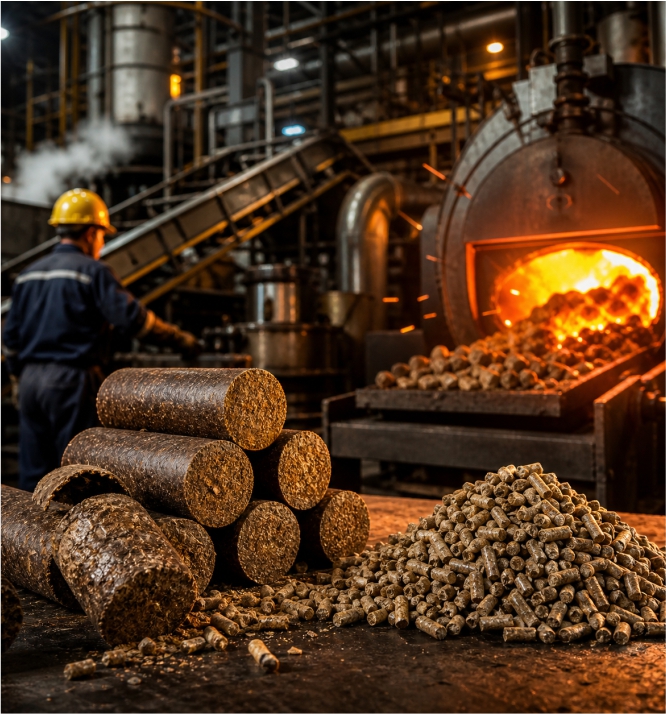
Turn agricultural waste into profitable, eco-friendly fuel. Techvera Solutions, in partnership with Lehra Fuel Tech Pvt. Ltd., brings you complete biomass briquetting and pellet machinery — from raw material processing to finished fuel production.
Biomass is organic material — primarily agricultural and forestry waste — that can be compressed into dense, uniform fuel in the form of briquettes and pellets. This process converts low-value waste such as rice husk, sawdust, sugarcane bagasse, and crop stalks into a clean, high-energy fuel source.
Biomass briquettes and pellets offer a higher density than loose biomass, which increases burning time and energy output significantly. They serve as a reliable, renewable alternative to coal, lignite, firewood, and crude oil — while dramatically reducing carbon emissions and conserving natural resources.
With India generating over 500 million tonnes of agricultural residue annually, biomass energy represents a massive, underutilised opportunity for industries to cut fuel costs and adopt sustainable practices.
Rice husk, wheat straw, sugarcane bagasse, cotton stalks, corn cobs and other crop residues.
Sawdust, wood chips, bark, timber off-cuts and forest residues from wood processing industries.
Dedicated fast-growing plants like miscanthus and switchgrass cultivated specifically for fuel.
Paper mill sludge, textile waste, groundnut shells and other by-products from manufacturing.
Organic fractions of solid waste including garden trimmings, food processing residues.
Coffee husk, mustard stalks, jute waste, de-oiled cakes from solvent extraction plants.
A complete line-up of industrial biomass processing machinery — from shredding and drying raw material to pressing finished briquettes and pellets, available via our partnership with Lehra Fuel Tech.
High-pressure screw-type briquetting machines that convert biomass powder into solid, cylindrical briquettes without any binder. Available in 40mm to 100mm die sizes.
Crank & piston type and ring die pellet mills for producing uniform, high-density pellets from biomass. Ideal for heating systems, gasifiers, and export-grade pellet production.
Reduces raw biomass to uniform particle size required for efficient briquette and pellet production. Available for both high-density and low-density materials.
Flash dryers and rotary drum dryers reduce moisture content in raw biomass to the optimal 10–12% required for quality briquette and pellet production.
Heavy-duty two-shaft shredder for size reduction of bulky biomass materials like crop stalks, wood logs, and municipal waste before grinding and pressing.
Complete material handling range: screw conveyors, belt conveyors, drag chain conveyors, auto feeders, vibrating screens, dust collectors, and stone separators.
A streamlined, four-stage industrial process transforms raw agricultural waste into high-density, market-ready biomass fuel — ready for industrial boilers, gasifiers, and heating systems.
Raw agricultural or wood waste is collected and fed into a dual-shaft shredder or chipper to reduce bulky material to a manageable size (50–80mm chunks).
The shredded material passes through a flash dryer or rotary drum dryer, reducing moisture content from 40–60% down to the required 10–12% for effective pressing.
Dried biomass is fed into a hammer mill grinder to produce uniform particles of 3–8mm size — the ideal input consistency for briquette or pellet presses.
Ground biomass is compressed at high temperature and pressure in a briquette press or pellet mill, producing solid, dense fuel ready for storage, sale, or use.
Lehra Fuel Tech, through Techvera Solutions, provides complete turnkey biomass plant setup — from equipment selection and layout planning to installation, commissioning, operator training, and after-sales support.
Every plant is tailored to the client's raw material type, production capacity requirement, and site conditions — ensuring maximum efficiency and return on investment.
Briquettes and pellets produced from biomass machinery serve as a direct, drop-in replacement for conventional fossil fuels in a wide range of industrial heating and energy applications. Their higher density and uniform size make them easy to handle, store, and transport.
As eco-friendly, renewable fuels, they help industries reduce carbon footprint, comply with environmental regulations, and achieve significant cost savings — typically 30–45% lower than coal or furnace oil on a per-calorie basis.
The machinery handles a wide variety of biomass inputs — making it adaptable to local crop residues, wood industry waste, and agricultural by-products available in your region.
Get in touch with Techvera Solutions for a free consultation — we'll assess your raw material availability, capacity requirements, and connect you with Lehra Fuel Tech for the right machinery.